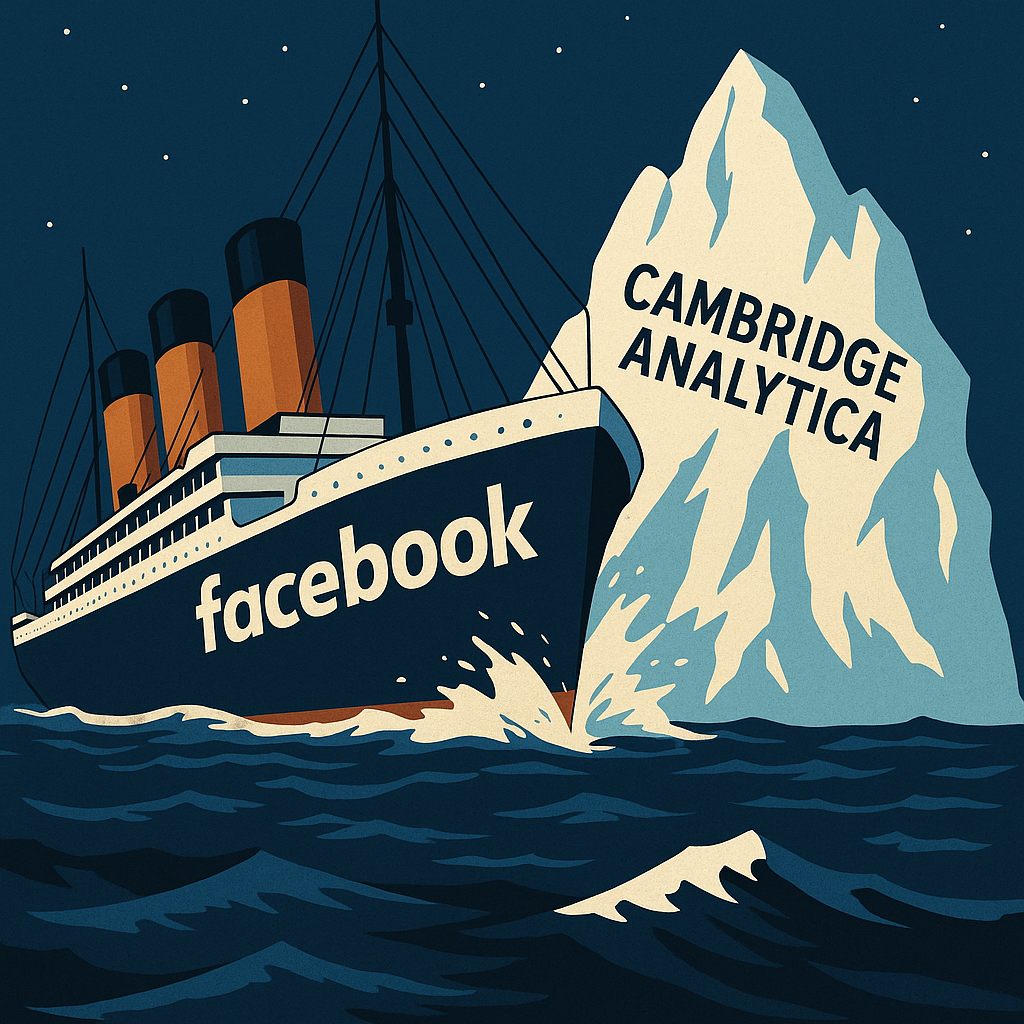
Facebook once reigned as the champion of social networking. Over the years, it transformed from a student-founded tech startup into a global tech giant. Now operating under the umbrella of Meta, the company oversees multiple platforms including Instagram, WhatsApp, and Threads. Despite its expansive reach, Facebook remains the flagship. It is the platform most deeply connected to both Meta’s rise and its most serious ethical failures.
As technology continues to evolve, ethical behavior has become not just an expectation but a necessity. In an industry built on data, innovation, and constant change, every decision can add value. It can also erode trust. We’ve come a long way from the days of MySpace and early online messaging. Today, companies like Facebook sit at the center of global communication, which means their ethical choices impact billions of people.
For tech companies, ethics are more than a policy. They are the framework for decision-making, consumer trust, and long-term sustainability. When those standards are broken, the consequences ripple across users, investors, and society itself.
Ethical and Legal Trouble
In 2018, Facebook found itself at the center of a global controversy when it was revealed that Cambridge Analytica had improperly accessed personal data of up to 87 million Facebook users, many without their informed consent (Schneble et al., 2018). This data came from a third-party quiz app. The app collected information from its users and from their connected friends. This all happened without explicit knowledge or consent from those users.
Cambridge Analytica used this data to create psychological profiles. They allegedly influenced voter behavior in major political campaigns, including the 2016 U.S. presidential election. The scandal exposed severe weaknesses in Facebook’s data-sharing policies. While the platform had allowed third-party data harvesting for years, users lacked awareness of how their information is repurposed. This raised urgent ethical questions about transparency, informed consent, and responsibility on the part of tech platforms in protecting privacy.
Following public outcry, Facebook faced major investigations, including from the Federal Trade Commission. The platform came under intense legal pressure, and the scandal became one of the most high-profile privacy cases in tech history (Isaak & Hanna, 2018).
Facebook’s ethical missteps highlighted a broader challenge for consumers: the lack of control and transparency in the digital age (Schneble et al., 2018). Users often do not understand how their data is collected or used, which creates an uneven power dynamic between platforms and the people who use them. This perception of power imbalance, combined with limited legal protection at the time, further weakened consumer trust.
Impact on Consumer Perception and Engagement
Public outrage after the Cambridge Analytica scandal was loud and immediate, but user behavior painted a more complex picture. Many people voiced concerns about their privacy, yet continued using the platform as usual. Emotional attachment to Facebook, along with its usefulness for staying connected socially and professionally, made it difficult for users to walk away. The lack of real alternatives only reinforced this dependence. Although frustrations were high, usage remained steady for many (Brown, 2020).
Facebook’s trust deficit deepened over time. According to a 2025 report, only 18% of U.S. social media users trust Facebook to protect their personal data. In comparison, 31% say they are not at all confident in platforms’ ability to safeguard their information (Usercentrics, 2025). Gen Z users, in particular, have emerged as the most privacy-conscious. They demand greater control over their data and more ethical behavior from digital platforms (Amra & Elma, 2025).
The platform’s response—including marketing efforts focused on transparency and user control—did little to shift these perceptions. Many users began adjusting their behaviors rather than leaving outright, limiting what they shared, or turning off location settings. While engagement stayed high, loyalty diminished, and skepticism continued to grow.
Long-Term Implications for the Brand
The Cambridge Analytica scandal marked a turning point for Facebook. What began as a single instance of unethical data use soon evolved into a broader reckoning with the company’s role in society. The fallout was not just about one privacy breach, but about the kind of power Facebook held over public opinion, personal data, and democratic processes.
In the months and years following the scandal, Facebook invested heavily in damage control. The company issued public apologies, made appearances before Congress, and updated its privacy settings in an effort to regain user trust. In 2021, the company rebranded as Meta. It shifted its public focus from social networking to building a future in virtual and augmented reality.
While these moves signaled change, public skepticism remained. The rebrand was seen by some as a distraction tactic rather than a genuine transformation. Digital trust had already eroded, and many users now viewed Facebook with caution. The platform’s reputation as a social connector had shifted into one of surveillance, manipulation, and misinformation (Lathan, 2023).
Despite this, Facebook (Meta) remains one of the most-used platforms in the world. Its scale and infrastructure continue to support billions of users and advertisers. This suggests that ethical failings alone may not be enough to dismantle a dominant brand. However, consumer expectations have changed. People now demand more transparency, accountability, and ethical leadership from tech companies. Facebook has become a symbol of what happens when those expectations are not met.
What Could Meta Have Done Differently?
Looking back, Facebook could have taken several key actions. These actions might have prevented or reduced the damage caused by the Cambridge Analytica scandal. The most critical failure was a lack of transparency. From the beginning, Facebook should have clearly communicated to users how their data could be accessed and used by third-party applications. Instead, these permissions were buried in complex terms of service that most users never read or understood.
Another major misstep was the company’s delayed response. When Facebook learned in 2015 that Cambridge Analytica had obtained user data without consent, the platform failed to inform the public until the story broke years later. By choosing silence over disclosure, Facebook not only damaged its credibility but also allowed the misuse of data to continue unchecked. An earlier, honest admission could have helped preserve trust and shown a commitment to user protection.
Facebook also lacked meaningful oversight of its own platform. Stricter internal controls and regular audits of third-party developers could have prevented the massive scale of the data breach. Rather than prioritizing growth and engagement metrics, the company should have focused more on ethical safeguards and user well-being.
Most importantly, Facebook needed to treat ethical decision-making as a core value, not a public relations strategy. Investing in stronger ethical leadership, clearer data policies, and consumer education could have strengthened the brand and helped rebuild long-term trust.
Conclusion
The Cambridge Analytica scandal exposed the risks that come with rapid innovation and unchecked influence in the tech industry. For Facebook, the fallout was not just a temporary image crisis. It reshaped how consumers and regulators view the responsibilities of digital platforms. The incident demonstrated that when a company neglects transparency and user trust, it risks not only legal consequences but also long-lasting damage to its brand.
While Facebook (now Meta) remains a dominant force in the tech world, its reputation has shifted. What was once a platform for connection and community is now also associated with surveillance, misinformation, and ethical blind spots. Recovering from such a crisis requires more than a rebrand or an apology. It requires a genuine commitment to ethical leadership, accountability, and user empowerment.
Consumers are becoming more aware of how their data is used. Younger generations are demanding higher standards from the brands they engage with. As a result, companies like Meta face a choice. They can either lead the way in ethical innovation or continue to face the consequences of putting profits before people. In the end, it is genuine ethical behavior that builds a foundation strong enough to support long-term brand loyalty and meaningful consumer engagement.
What do you think Meta needs to do to earn back your trust? Have you changed your social media habits due to privacy concerns? Share your thoughts below!
References
Amra & Elma. (2025). Top Facebook algorithm and privacy statistics. Retrieved from https://www.amraandelma.com/top-facebook-algorithm-statistics/
Brown, J. (2020). Users’ reactions to the Cambridge Analytica scandal: Trust, behavior, and data privacy. Social Media + Society, 6(2), 1–12. https://doi.org/10.1177/2056305120913884
Isaak, J., & Hanna, M. J. (2018). User data privacy: Facebook, Cambridge Analytica, and privacy protection. Computer, 51(8), 56–59. https://doi.org/10.1109/MC.2018.3191268
Lathan, K. (2023). The evolution of trust in digital platforms post-Cambridge Analytica. Journal of Digital Ethics and Privacy, 9(1), 25–42.
Schneble, C. O., Elger, B. S., & Shaw, D. M. (2018). The Cambridge Analytica affair and Internet-mediated research. EMBO Reports, 19(8), e46579. https://doi.org/10.15252/embr.201846579
Usercentrics. (2025). Data privacy statistics: Consumer trust and preferences. Retrieved from https://usercentrics.com/guides/data-privacy/data-privacy-statistics/
 Marketing Adventure
Leave a comment