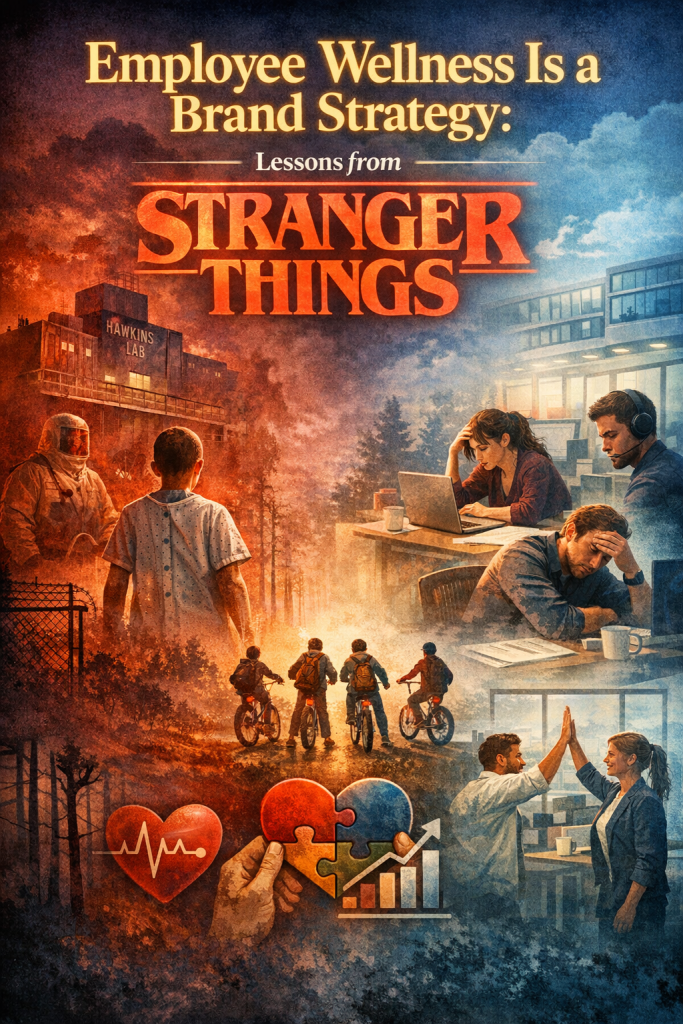
One cultural expression that connects strongly to wellness is the Netflix series Stranger Things. Set in the 1980s, the show follows a group of kids dealing with supernatural events tied to secret government experiments. At the center of the story is a child who has been subjected to experimentation, which raises serious questions about ethics, control, and what happens when people are treated as tools instead of individuals. At the same time, the show leans heavily into nostalgia, especially for those who grew up in that era, highlighting friendships, independence, and a sense of connection that shaped childhood experiences for many in Generation X.
The message about wellness in Stranger Things is layered. On one side, it shows how systems of power can harm people when results are valued more than well-being. The experimentation on children reflects a lack of ethical responsibility and highlights how vulnerable individuals can be overlooked or exploited. On the other side, the show emphasizes something just as important: connection. The friendships between the kids show how strong relationships can help people cope with fear, stress, and uncertainty. It reminds us that wellness is not just individual, it is deeply influenced by the people and environments around us. In many ways, this reflects the idea that even in difficult or stressful situations, people are still searching for meaning and connection, which plays a central role in overall well-being (Frankl, 1946).
There are some important social implications here. The show pushes us to think about how much trust we place in institutions and whether those in power are truly prioritizing human well-being. It also highlights how much our environments shape us, emotionally and mentally. The nostalgic elements can even make us reflect on how different life feels today, especially when it comes to connection, stress, and the pace of everyday life.
This idea connects directly to employee wellness, especially in service and retail environments. In Stranger Things, the lack of concern for individual well-being within powerful systems shows what can happen when people are treated as expendable. In real workplaces, something similar can happen when employees are expected to perform under constant pressure without enough support. Over time, that stress can lead to burnout, frustration, and disengagement.
From a marketing perspective, this matters more than it might seem. Employee wellness is not just an internal issue, it shapes customer experience in a very real way. Employees are often the face of a brand, especially in customer-facing roles. When someone is exhausted or overwhelmed, it shows in their interactions. Customers can feel it, whether it is through tone, service quality, or overall experience. On the other hand, when employees feel supported and valued, they are more present, more engaged, and more likely to create positive interactions. Those small moments build trust and shape how people see a brand over time. In fact, marketing research has long emphasized that consistent, positive interactions across touchpoints are essential to building strong customer relationships and brand equity (Clow & Baack, 2021).
The show also highlights the importance of connection, which translates directly into workplace culture. Just like the kids rely on each other to get through difficult situations, employees benefit from strong support systems and teamwork. A positive workplace culture can reduce stress, improve morale, and ultimately lead to better outcomes for both employees and customers.
At the end of the day, Stranger Things offers an unexpected but meaningful lesson. When organizations treat people as expendable, the effects do not stay internal, they ripple outward. They impact relationships, experiences, and trust. In a business context, that ripple reaches the customer.
Employee wellness is not just about taking care of people, it is also about building stronger brands. When companies invest in their employees, they are improving productivity, strengthening customer experience, and creating more authentic connections. What happens inside an organization is exactly what customers experience on the outside.
Reference
Clow, K. E., & Baack, D. E. (2021). Integrated advertising, promotion, and marketing communications (9th ed.). Pearson Education (US).
Frankl, V. (1946). Man’s search for meaning. Beacon Press.
OpenAI. (2026). Employee wellness is a brand strategy: Lessons from Stranger Things [AI-generated image]. ChatGPT.
 Marketing Adventure
Leave a comment